


Protecting Patient Environments
Philadelphia has some of the premier healthcare facilities in the country, which depend on stable and predictable environments to support their patients and staff. Even small changes in noise or vibration can disrupt rest, interfere with verbal communication, and compromise sensitive equipment. That is why ongoing noise and vibration monitoring is an important consideration for hospital operations teams, and for the developers building near them.
We help hospitals and healthcare teams stay informed with real-time, remote monitoring solutions that track environmental conditions as they happen. Our systems provide real-time cloud data visualization and automated alerts that enable you to respond quickly when conditions approach set thresholds. Whether your concern involves nearby construction, medivac flight path noise, sound from generators and other mechanical systems, or vibration that could impact sensitive equipment, we can help you maintain a quieter and more stable clinical setting.
Custom Monitoring for Sensitive Healthcare Spaces
Every hospital is different, which is why noise and vibration monitoring should reflect your unique space and how it’s really used. We work with your team to define what should be monitored and identify any relevant limits or criteria, then set up properly calibrated sensors that collect reliable data over time. This can be especially important in spaces with vibration-sensitive equipment such as MRIs and imaging systems, where even small disturbances can impact performance.
Monitoring thresholds are typically set with reference to established criteria such as the FGI Guidelines for Design and Construction of Hospitals, ASHRAE noise criteria (NC) for HVAC noise in patient and procedure areas, equipment manufacturer requirements, and generic vibration criteria (VC).
Our monitoring programs can also help your team better understand noise and vibration conditions regardless of the source. With secure online dashboards, long-term logging, and alert management, you can remotely monitor live conditions and avoid unnecessary site visits.
How We Help Philadelphia Hospitals and Healthcare Facilities
Collecting data is only part of noise and vibration monitoring for hospitals. We help healthcare teams interpret results and make practical decisions. Hospital monitoring engagements often run alongside construction, equipment installations, or major renovations. We work directly with facility managers, contractors, and clinical staff to identify which spaces matter most, define what conditions should trigger an alert, and review data during high-risk activity. That work translates into specific decisions: whether a nearby pile-driving session is putting the imaging suite at risk, or sustained noise is approaching vendor limits and patient care criteria. For time-sensitive work, the monitoring plan should also specify who receives alerts and what field response follows when a threshold is approached.
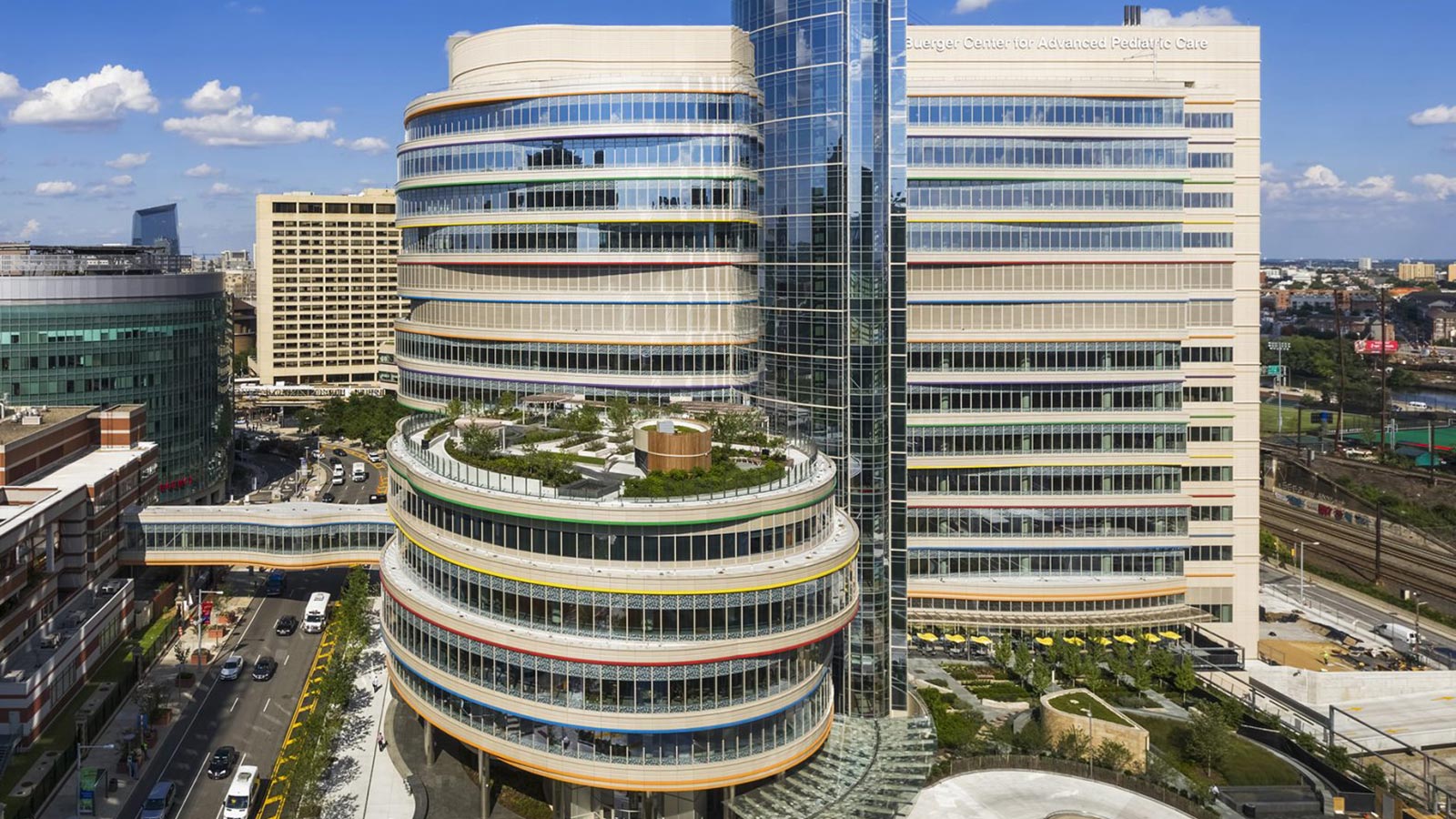
Our Philadelphia-area healthcare portfolio is broad; two of the most visible projects are the CHOP Buerger Center for Advanced Pediatric Care and the Roberts Children’s Health Inpatient Tower at CHOP. Those projects also point to the kinds of issues a local monitoring plan may need to account for: imaging-suite vibration, roof-level mechanical noise, medivac activity, and speech privacy or intelligibility expectations in occupied clinical spaces.
Looking to explore further? See how our monitoring systems are used in real projects on our Case Studies page, or get into the technical details on our Features and Specifications page. Contact us to get started or to explore a demonstration.