


Hospitals rely on stable, predictable conditions to support patient care, effective communication, and the performance of sensitive medical equipment. A structured monitoring approach matters in hospital settings, both for day-to-day operations and for planning around nearby construction or facility changes. At Acentech, we help healthcare organizations implement real-time monitoring to provide clear, reliable insight into environmental conditions as they evolve.
YOUR CHALLENGES, OUR EXPERTISE
Start by Identifying What Needs to Be Monitored
Identifying what needs to be tracked is the first step in any successful noise and vibration monitoring program. In a hospital setting, that means determining whether noise, vibration or both should be monitored, as well as defining any limits or other relevant criteria. Regulatory requirements, equipment specifications, project goals, and patient privacy are just a few factors to consider. Common references include the FGI Guidelines for Design and Construction of Hospitals, ASHRAE noise criteria (NC) for HVAC systems, and equipment manufacturer specs or generic vibration criteria (VC) for vibration-sensitive equipment.
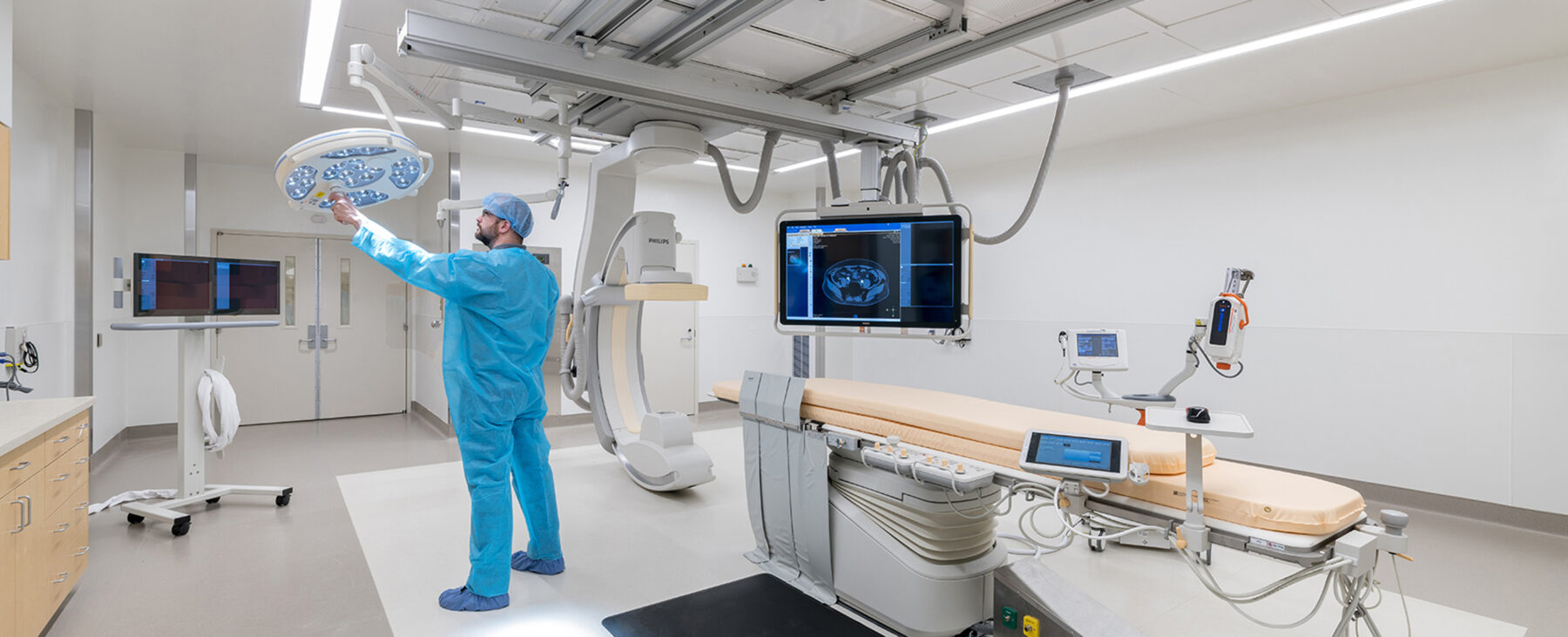
At Acentech, we help teams decide what they want to monitor based on the conditions of their facility, daily operations and nearby activities, as well as the areas most likely to be impacted. This can include patient rooms, outpatient spaces, imaging suites, laboratory areas, and procedure rooms. For a typical hospital project, that scope may include sound monitoring in patient-areas and administrative spaces, and vibration monitoring in MRI suites, laboratories, and radiation therapy rooms. Sometimes that monitoring might extend to the rooftop or helipad noise, and even construction activity outside the building.
Use the Right Sensors and Set Them Up Correctly
Once the scope of your noise and vibration monitoring program is clear, the next step is selecting and calibrating the appropriate sensors. This is especially important in healthcare environments, where even small disturbances can make a big difference. Proper sensor selection depends on the type of condition being monitored, the sensitivity of the space and the level of detail needed to understand what is happening over time.
Every aspect of our monitoring programs is personalized to each project, from sensor selection and calibration to installation and activation. In hospitals, this often means targeting spaces with vibration-sensitive equipment such as MRIs and imaging systems, as well as patient and staff areas impacted by nearby construction, helicopter activity or mechanical operations.
Make Real-Time Data Easy to Access and Understand
Monitoring is most useful when teams can see what is happening as conditions change. Real-time and remote systems make that possible by giving users access to live information and eliminating unnecessary site visits. Secure online dashboards, real-time cloud data visualization, long-term logging, and automated alerts can all help your team maintain oversight and respond when thresholds are approached.
This kind of access is useful for hospital staff, project teams, and engineers who need to know if and how outside activity or internal systems are impacting the environment. Instead of relying on assumptions or waiting until issues arise, teams can make decisions based on current data. A customized alert plan might define who receives notifications, how quickly the data will be reviewed, and what response is expected (and from whom) when a threshold is approached.
Turn Monitoring Results Into Practical Action
Collecting data is only part of the answer. A successful program also requires interpretation, analysis, and reporting that helps people understand what the results mean. We support healthcare teams by helping them evaluate changing conditions and make practical decisions based on the information the monitoring reveals. That may involve understanding the effects of construction impacts, reviewing conditions associated with mechanical systems, assessing exterior-to-interior noise transmission and more.
For practical examples of these principles in action, see our Case Studies page. Technical details on the systems themselves live on the Features and Specifications page. We’d love to hear from you, Contact us to talk through a specific monitoring need.