

In Philadelphia, Construction Has Neighbors
Philadelphia construction sites do not always have much room to work. Rowhomes, hospitals, universities, research buildings, and historic properties often sit side by side. That means a pile driver, excavator, or demolition activity that might go unnoticed elsewhere can quickly create concerns among nearby neighbors. Side note: head over to our recent Lab article called “Breaking Ground” and have some fun learning about challenges related to heavy construction activity next to various sensitive neighbors.
At Acentech, we help construction companies in Philadelphia manage those risks with real-time noise and vibration monitoring.
The city’s noise ordinances and agency requirements can add another layer of complexity, especially when limits vary by zoning, time of day, or proximity to sensitive uses. With continuous monitoring in place, contractors have clear and defensible records instead of relying on guesswork when questions or complaints come up.
From Sensor to Screen: How Our Noise and Vibration Monitoring Works
Our monitoring systems are designed to give construction companies, or their neighbors, a clear view of what is happening beyond the project site. We can place sensors at property lines, on adjacent structures, near sensitive equipment, and other key areas depending on the needs of the project.
Sensors collect data continuously and send it to secure, cloud-based dashboards that the project team, ownership group, or other approved stakeholders can access remotely. When readings approach or exceed a set threshold, automated alerts can give crews time to adjust before a small issue becomes a bigger problem. Before work starts, we work with the relevant stakeholders to develop a monitoring plan, which should define the applicable limits, who receives alerts, and what response is expected from the field team.
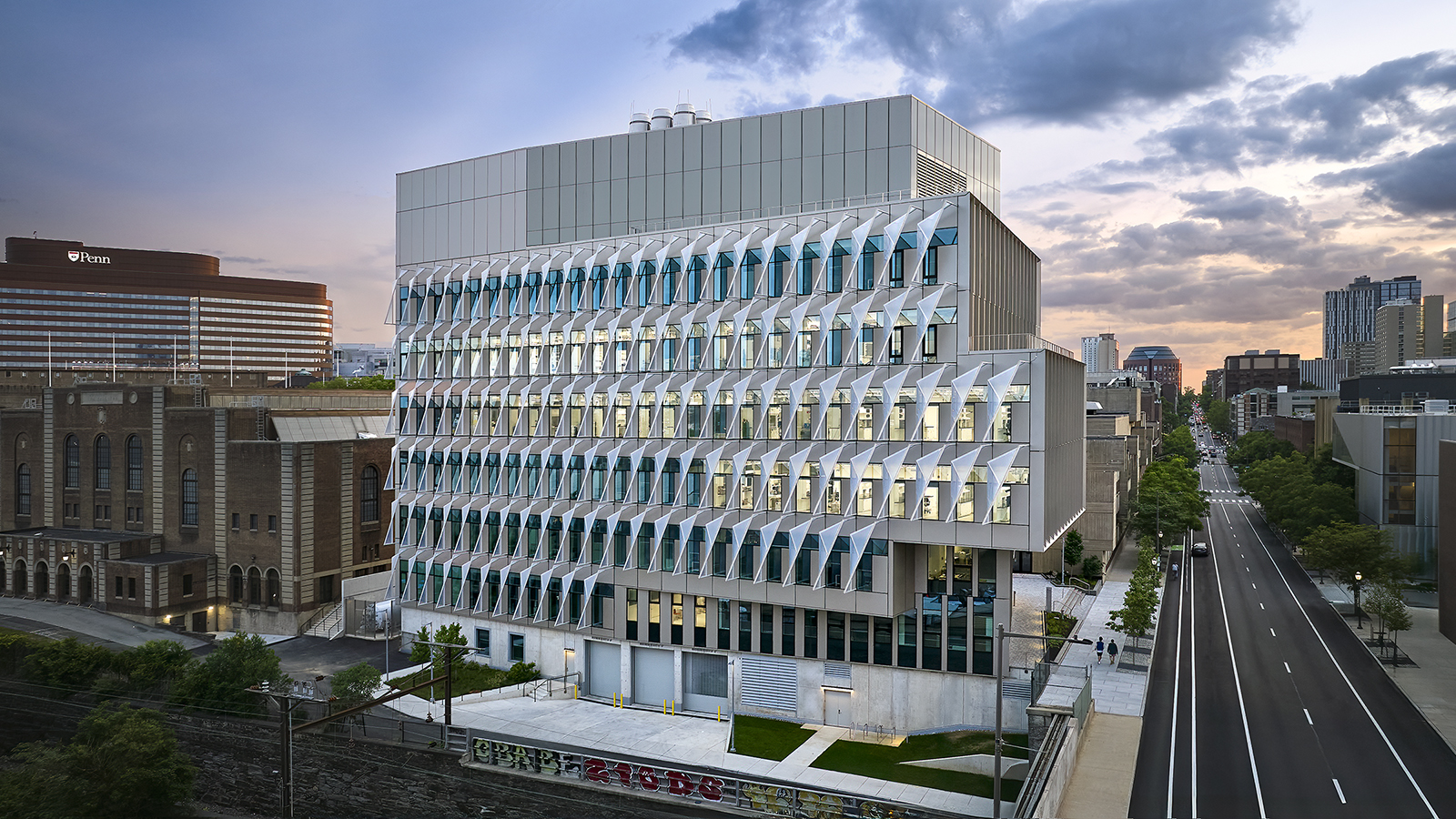
This is especially valuable in Philadelphia, where construction often takes place near hospitals, research labs, transit lines, and historic sites. For example, at UPenn’s Vagelos Laboratory for Energy Science and Technology, Acentech helped address vibration from passing trains for a research building located beside an active railway.
How We Help Philadelphia Hospitals and Healthcare Facilities
Continuous monitoring gives construction teams a reliable record they can reference when questions from neighbors, building owners, regulators, or other stakeholders come up.
If a complaint is made, Acentech can help review the exact noise or vibration levels recorded at that time. Instead of letting the issue turn into a lengthy back-and-forth, the team can respond with real data so there is a clearer understanding of what was happening on site.
That documentation can also be valuable in conversations with permitting agencies, institutional owners, universities, and hospital systems that need confidence that nearby spaces are protected during construction. For construction companies in Philadelphia, noise and vibration monitoring is a project requirement, helping to build trust, reduce risk, and strengthen public support of your high-visibility projects.
Learn how Acentech’s monitoring systems are used to support real-world projects on our Case Studies page, or review system capabilities on our Features and Specifications page. Contact us to discuss noise and vibration monitoring for your next Philadelphia project.